

Sustainability continues to influence how food brands approach packaging design and production. Printing methods in particular have evolved rapidly as companies seek cleaner production processes and more efficient workflows. One area receiving growing attention is eco printing, which combines environmentally conscious technologies with high-performance color reproduction.
Advances in UV ink chemistry and expanded gamut printing systems now allow brands to produce vibrant packaging while reducing emissions, waste, and energy consumption. Food manufacturers exploring eco-friendly food packaging often discover that modern printing innovations deliver both sustainability benefits and operational advantages.
UV-Based Inks for Eco Printing Reduce Environmental Impact
UV-curable inks represent one of the most significant advancements in sustainable printing technology. Unlike solvent-based alternatives, these inks are formulated without volatile organic compounds. The absence of volatile organic compounds (VOCs) eliminates harmful air emissions that can pose risks to both the environment and human health.

Energy efficiency is another major advantage. UV inks cure instantly under ultraviolet light, which removes the need for lengthy drying periods. Modern LED curing systems require significantly less power than traditional methods while maintaining high production speeds.
Recycling compatibility also improves when UV inks are used. Solvent-based inks can sometimes bleed into substrates during recycling, complicating material recovery. UV-cured prints remain stable on the packaging surface, making it easier to reclaim and reuse the underlying materials.
Eco Printing Durability and Performance Advantages
Environmental improvements are only part of the story. UV ink systems also provide strong performance characteristics that benefit both manufacturers and brand owners.
Instant curing allows printed surfaces to move directly to the next production stage without lengthy drying times. This prevents smudging during handling and helps maintain consistent print quality throughout the manufacturing process.
Finished packaging often demonstrates strong resistance to fading, scratching, and abrasion. Products may travel through multiple distribution stages before reaching store shelves, so durability is important for protecting brand presentation.
Another operational benefit involves structural simplification. UV inks frequently deliver greater resistance than water-based alternatives, reducing the need for additional lamination layers. Fewer materials in the packaging structure can support sustainability goals while improving production efficiency.
These advantages make UV printing technology an appealing option for companies producing flexible packaging, labels, or custom packaging formats.
Compatibility With Sustainable Materials
Food packaging continues to evolve toward environmentally responsible materials. Recycled paper, bioplastics, and other renewable substrates are becoming more common across the industry.
Modern UV ink formulations are designed to adhere effectively to both porous and nonporous surfaces. This versatility allows printers to work with a wide range of sustainable substrates without sacrificing print quality.
Designers also benefit from this flexibility. Different materials often create unique visual effects, from natural textured papers to smooth biopolymer films. UV inks can maintain strong adhesion across these surfaces while delivering sharp graphics and vibrant colors.
The result is greater freedom when developing eco-friendly food packaging that aligns with both brand identity and environmental goals.
Expanded Gamut Printing Improves Efficiency
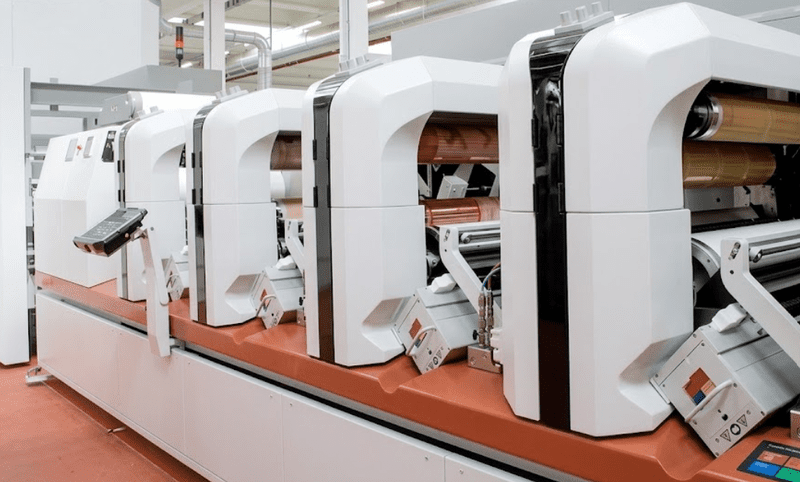
Another important development in sustainable printing involves expanded gamut technology. Seven-color gamut printing uses a standardized ink set consisting of cyan, magenta, yellow, black, orange, green, and violet.
This system can reproduce a large portion of the Pantone color library without requiring separate spot inks for each project. Instead of mixing custom colors for every production run, printers rely on the same seven inks to achieve a wide spectrum of hues.
Reduced ink mixing significantly improves operational efficiency. Traditional spot color processes often involve preparing custom blends, cleaning press components, and disposing of leftover ink. Expanded gamut printing eliminates much of that waste.
Many printers report lower material consumption along with faster job transitions when using this approach. Press capacity can also increase because operators spend less time preparing specialized inks between runs.
The ability to simulate more than ninety percent of Pantone colors also supports brand consistency. Designers can maintain precise color standards across different product variations while benefiting from a streamlined production process.
Delivering High Quality Visual Results
Efficiency improvements would mean little if print quality suffered. Fortunately, expanded gamut printing offers impressive visual performance that meets the expectations of modern packaging design.
The addition of orange, green, and violet extends the color range beyond traditional four-color process printing. This expanded palette allows printers to reproduce richer tones and more accurate brand colors.
Gradients and transitions also benefit from the additional ink channels. Smooth color blending can create visually striking packaging that captures attention on crowded retail shelves.
Predictable color management is critical for maintaining consistency across production runs. Standardized expanded gamut profiles allow printers to replicate designs reliably across different presses and facilities. These capabilities give designers greater creative freedom while maintaining the efficiency advantages that make expanded gamut printing attractive from a sustainability perspective.
Explore Sustainable Printing With Revere Flexpak
Printing technology continues to shape the future of packaging sustainability. UV inks and expanded gamut printing illustrate how innovative processes can reduce environmental impact while delivering exceptional visual results.
In addition, sustainability is no longer only a marketing and efficiency decision. Several U.S. states are implementing extended producer responsibility (EPR) programs that mandate producer participation in a producer responsibility organization (PRO). These programs require reporting on packaging types and volumes entering the market, and collect fees to fund recycling infrastructure upgrades.
Revere Flexpak supports food manufacturers with flexible, eco-friendly packaging solutions designed for performance, efficiency, and modern sustainability goals. Our expertise in custom packaging allows brands to explore uniquely tailored options and advanced printing technologies that help products stand out from the crowd while meeting sustainability goals.
Whether you’re looking for custom boxes, coffee packaging, candy boxes, re-sealable pouches, cannabis packaging for edibles, or something else, the Revere Flexpak team can help identify solutions suited to your production requirements and assist with custom packaging design. Let’s connect.
Eco Printing & Sustainable Packaging FAQs
1. What makes UV inks more sustainable than traditional solvent-based inks?
UV inks contain zero VOCs and cure instantly under ultraviolet light, eliminating harmful air emissions and drying time. This reduces production waste, minimizes solvent usage, and provides superior adhesion and durability on food packaging.
2. How does expanded gamut printing reduce packaging waste?
Expanded gamut printing uses additional ink channels beyond CMYK to achieve wider color ranges with fewer reprints, reducing color-matching failures and material waste. This precision also decreases ink consumption and energy usage, supporting faster turnaround times and minimal waste for food packaging applications.
3. How can sustainable packaging reduce my brand's carbon footprint?
Sustainable packaging reduces emissions through lighter materials, instant UV curing (eliminating energy-intensive drying), and recyclable substrates that avoid contributing to landfill methane.


